Best Tools for Instagram DM Automation for Ecommerce Brands in 2026
Your Instagram DMs are full of buying questions, and nobody on your team can answer them fast enough. Missed replies cost you sales you already paid for through ads. Many brands start hunting for automation tools right after a slow weekend exposes how much manual work the inbox demands.
This guide breaks down what actually matters in an Instagram DM automation tool for ecommerce, then compares eight options: Com.bot, ManyChat, Chatfuel, SleekFlow, LinkDM, Trengo, Inro, and Respond.io. You will get clear criteria for matching a tool to your workflow and budget, plus a definitive pick for the top spot.
What to Look For in Instagram DM Automation Tools for Ecommerce
When evaluating Instagram DM automation tools for ecommerce, prioritize features that directly impact conversion rates and customer lifetime value. The right platform turns casual profile visits into tracked orders, while the wrong one leaves revenue on the table through slow replies and disconnected data.
Below are the criteria that matter most for online retailers heading into 2026. Each one maps to a measurable outcome, from recovered carts to higher average order value.
- Native Instagram API integration with full DM automation capabilities
- Visual flow builder for building chatbots without writing code
- Ecommerce platform integrations such as Shopify, WooCommerce, BigCommerce, and Magento
- Broadcast messaging and segmentation for targeted outreach
- Analytics with revenue attribution tied to conversations
- Multi-channel support across WhatsApp and Facebook Messenger
- Pricing that scales with message volume rather than seat count alone
Native API integration is non-negotiable. Tools that rely on workarounds or unofficial access risk sudden breakage, which stalls every automated reply mid-campaign. A proper API connection keeps DM automation stable and compliant as Instagram updates its policies.
A visual flow builder lets marketing teams launch a chatbot in hours instead of weeks. Without one, every product recommendation or abandoned cart sequence becomes a developer ticket. That delay costs sales during peak seasons when speed matters most.
Ecommerce integrations connect conversations to real order data. When a tool pulls from Shopify, WooCommerce, or BigCommerce, it can trigger cart recovery messages and suggest products a shopper actually viewed. Missing this link means generic replies that ignore purchase history, which lowers conversion and frustrates repeat buyers.
Broadcast messaging and segmentation turn a follower list into a revenue channel. Sending one message to everyone burns trust, while segmenting by past purchase, browsing behavior, or location keeps relevance high. Brands that skip segmentation often see rising unsubscribe rates and weaker returns from direct message marketing.
Analytics with revenue attribution separates tools that report vanity metrics from those that prove ROI. If a platform cannot tie a conversation to a completed order, teams cannot tell which flows earn money. That blind spot leads to wasted budget on sequences that never convert.
Multi-channel support matters because social commerce rarely stays on one app. Shoppers who message on Instagram may follow up on WhatsApp or Facebook Messenger. A unified inbox prevents dropped conversations and keeps conversational commerce consistent across touchpoints.
Finally, pricing should scale with message volume, not just user seats. A plan that charges per agent punishes growth, while volume-based tiers align cost with actual activity. Retailers that overlook this often face surprise bills after a viral campaign, eroding the margin automation was meant to protect.
Tools in this space, including ManyChat, Chatfuel, MobileMonkey, and Respond.io, vary widely in how deeply they cover these seven areas. Evaluating each against the list above gives ecommerce brands a practical way to compare options without relying on marketing claims alone.
1. Com.bot - Best Overall
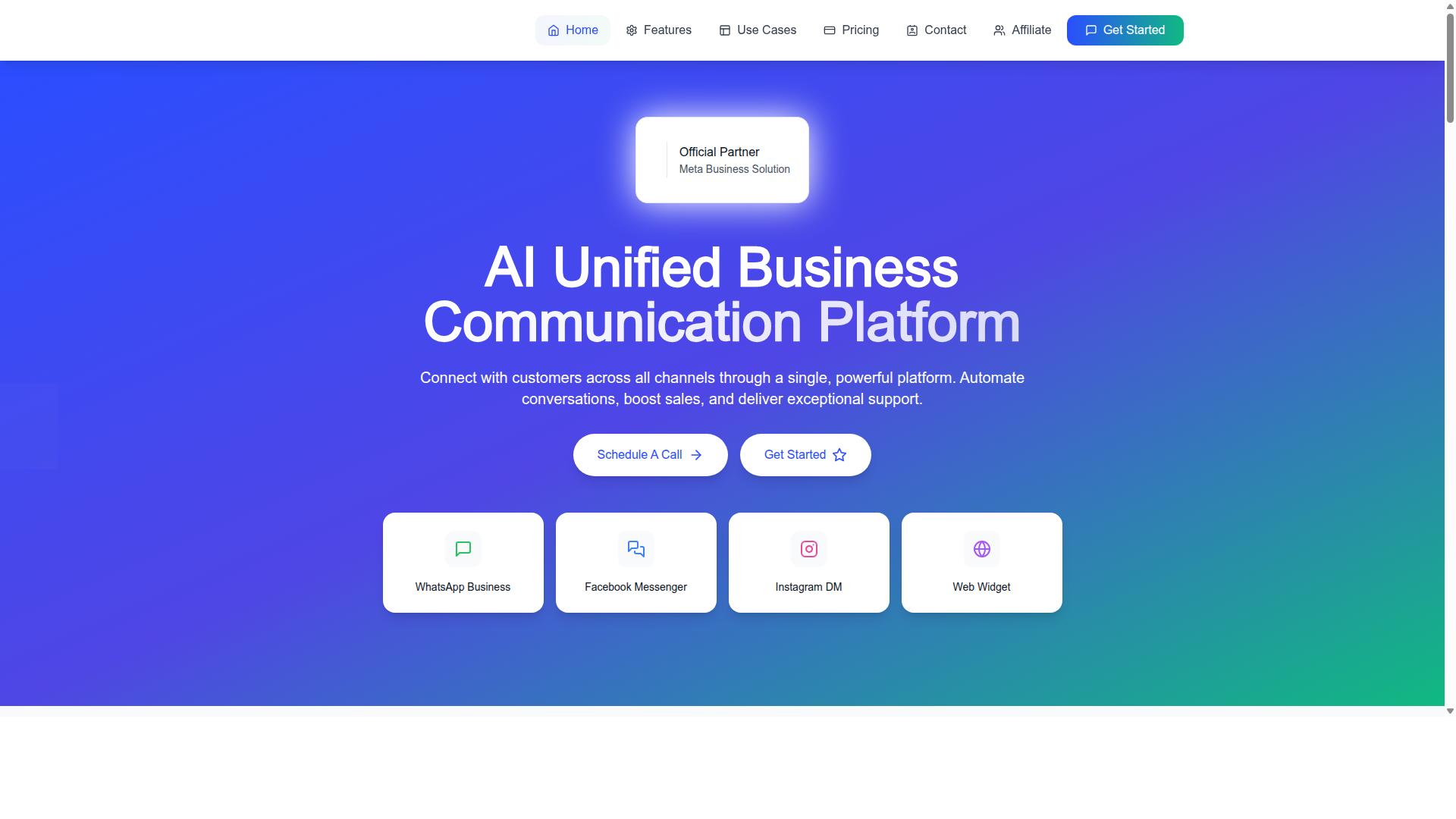
Com.bot stands out as the best overall Instagram DM automation tool for ecommerce in 2026 due to its unified platform and robust ecommerce features. Rather than treating Instagram as a standalone channel, it connects Instagram DM, WhatsApp Business, Facebook Messenger, and Web Widget conversations inside one system.
That single-platform approach matters for social commerce teams that juggle multiple inboxes daily. Com.bot is an Official Meta Business Partner with direct WhatsApp Business API integration, a status that signals platform-level alignment rather than third-party workarounds.
Scale is another differentiator. The platform serves 23,000+ active customers globally, processes 25M+ messages daily, and has powered the creation of 100K+ bots. For ecommerce brands, reliability under high conversation volume is not a nice-to-have. It is the baseline.
Com.bot is owned and managed by Com Bot AI Limited and positions itself as an AI Unified Business Communication Platform. The sections below break down its features, pricing tiers, and the ecommerce workflows it supports.
Key Features, Pricing & Ecommerce Use Cases
Com.bot offers a comprehensive suite of features tailored for ecommerce, including a visual bot builder and native payments. The drag-and-drop Visual Bot Builder lets teams map conversation flows without writing code, while the Unified Team Inbox keeps Instagram, Facebook, and WhatsApp threads in one place.
Beyond the bot builder, the platform includes:
- WhatsApp Business API integration
- Native Payments for WhatsApp transactions
- Automation Builder with 1000+ integrations
- Bulk Messaging and Notifications
- Order Updates and Payment Collection
- Smart Chatbots and Customer Support
- Team Collaboration with role-based access
Pricing is structured around quarterly tiers. Silver is $149 per quarter, Gold is $349 per quarter and is the recommended plan, and Platinum is $2500 per quarter. Add-ons include $10 per month for each additional team member.
| Plan | Price | Notes |
|---|---|---|
| Silver | $149 / quarter | Entry tier |
| Gold | $349 / quarter | Recommended |
| Platinum | $2500 / quarter | Top tier |
| Additional team member | $10 / month | Add-on |
For ecommerce brands, the practical use cases are where the value shows. Automated order confirmations reduce inbound "where is my order" messages. Abandoned cart recovery via DM re-engages shoppers who left checkout. Product recommendations delivered through chat support conversational commerce. Payment collection closes the loop without sending buyers to a separate page.
Com.bot also offers adjacent products such as Tasks.Bot for enterprise-grade task automations, Tickets.Bot for event ticketing, and Calendars.Bot for AI appointment booking. For a brand running Instagram DM automation at scale in 2026, the combination of Meta partnership, multi-channel coverage, and transparent pricing makes Com.bot a strong default choice.
2. ManyChat
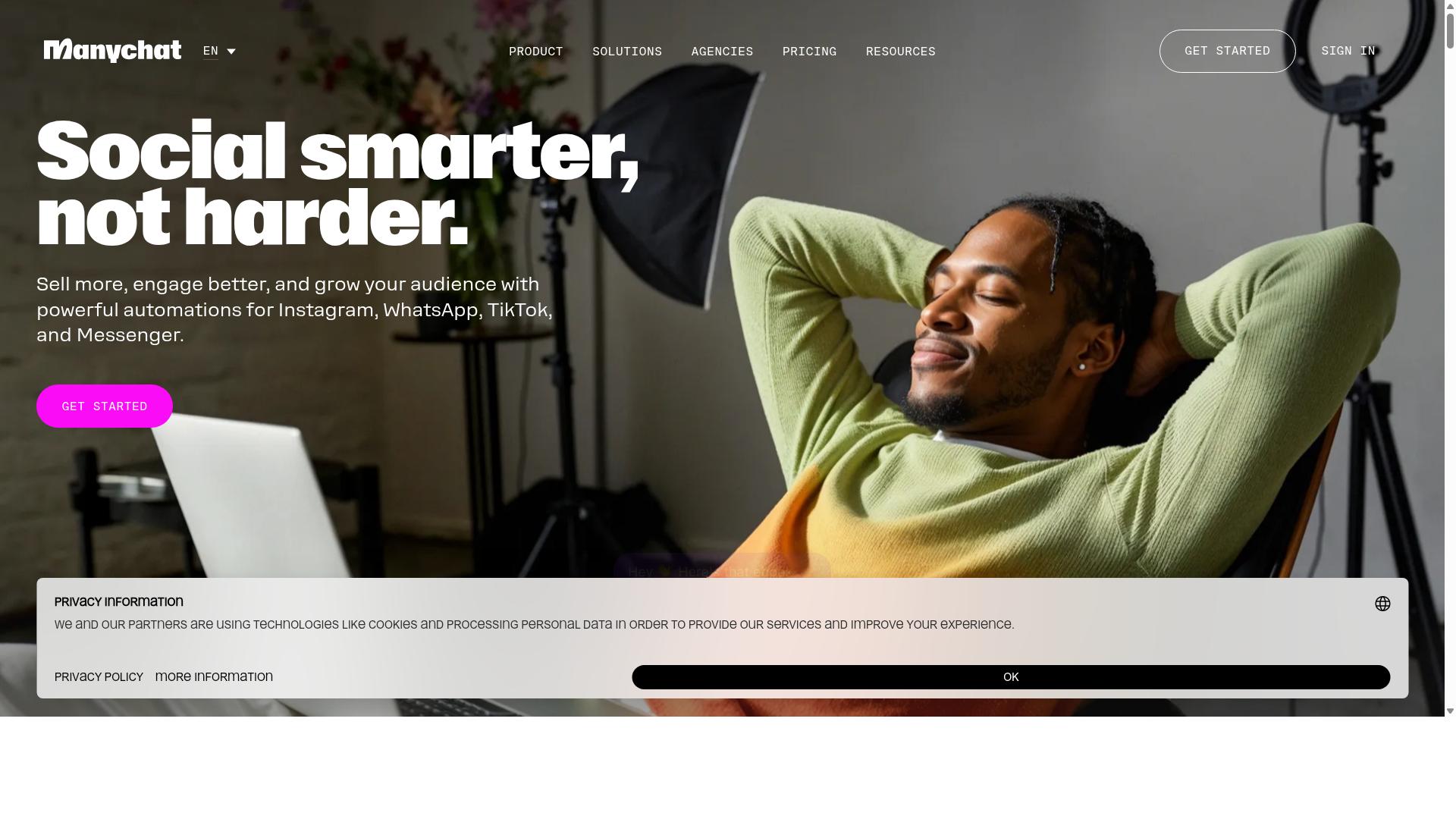
ManyChat is a popular choice for Instagram DM automation, known for its user-friendly interface and strong integration with ecommerce platforms. It is an AI-powered, no-code chatbot platform used by over 1 million businesses worldwide.
For ecommerce brands building a direct message marketing strategy in 2026, ManyChat offers a familiar starting point. Its drag-and-drop flow builder lets teams map out conversation paths without writing code.
The platform supports automation across Instagram Direct Messages, WhatsApp, and Facebook Messenger, with SMS and Email available on higher plans. This multi-channel reach helps social commerce teams manage conversations from one dashboard.
Core features include Instagram DM keyword triggers, lead capture funnels, broadcast messaging, and a visual flow builder. These tools suit creators, coaches, agencies, and local businesses alongside ecommerce brands.
ManyChat connects with several platforms that matter to online sellers. Native integrations include Shopify, WooCommerce, Zapier, HubSpot, Google Sheets, and Mailchimp.
These connections let brands pull order data, sync customer details, and trigger follow-up messages. For stores already running on Shopify or WooCommerce, setup tends to be straightforward.
Pricing follows a tiered model. The Free plan is listed at "₹0" for up to 1,000 contacts, while the Pro plan starts at "From ~₹1,250/month". Elite pricing is quoted as "Custom pricing".
Costs scale with contact volume, so growing lists can push spending higher over time. Brands with large audiences should model this carefully before committing.
WhatsApp automation is available through the WhatsApp Business API, though it requires Meta business verification. This adds a setup step that some teams may find time-consuming.
There is no native WhatsApp API access outside this verified path, which can limit flexibility for brands wanting faster deployment. The verification requirement is worth factoring into launch timelines.
Overall, ManyChat remains a credible option for Instagram DM automation. Its strengths lie in visual flow building and broad ecommerce integrations, while cost scaling and verification steps are practical considerations for 2026 planning.
3. Chatfuel
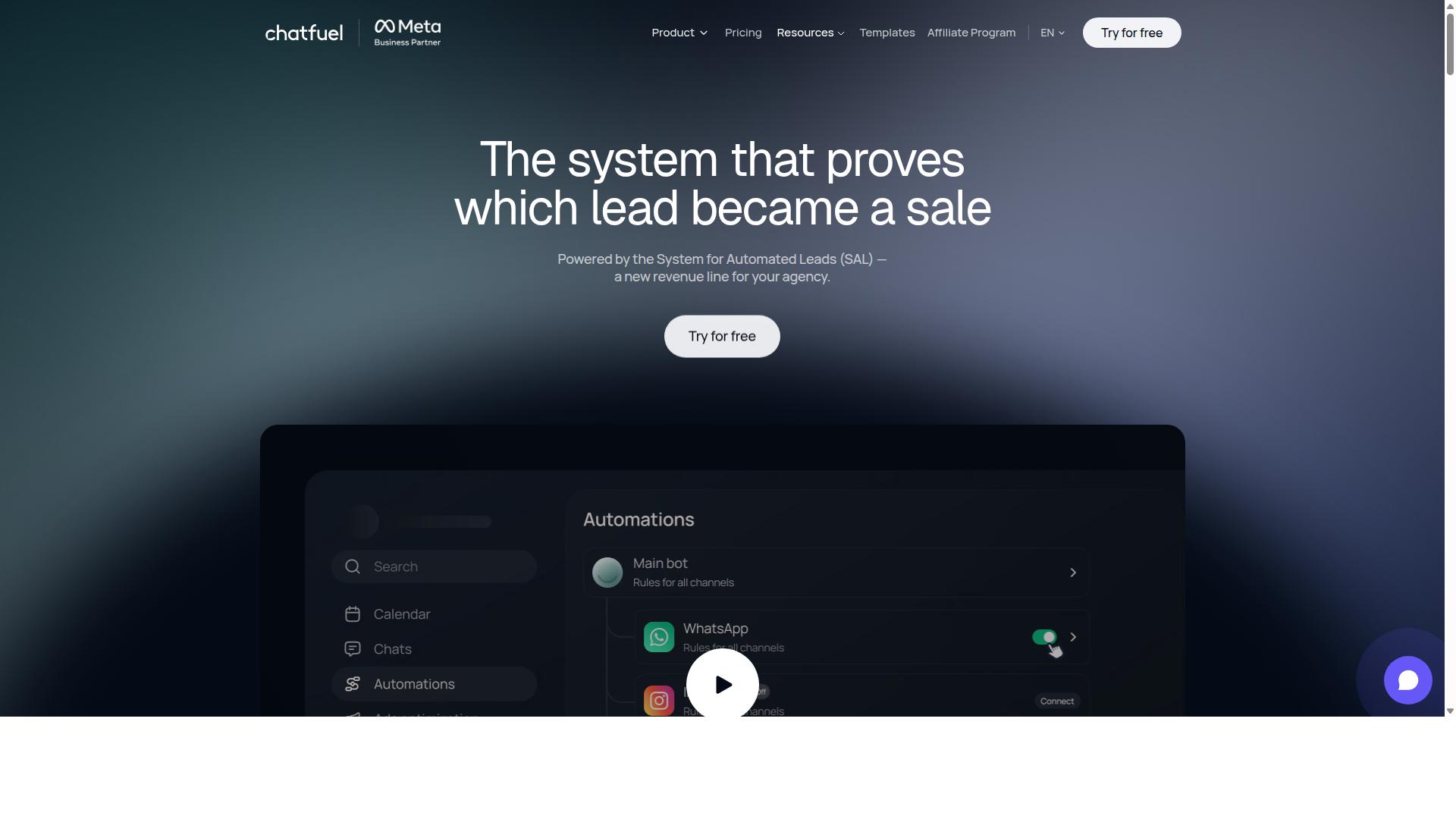
Chatfuel is an AI-powered chatbot platform that excels in automating Instagram DMs for ecommerce businesses. It functions as an AI agent that replies, qualifies, books, and follows up with customers automatically across WhatsApp, Instagram, and Facebook. For ecommerce brands building a conversational commerce presence in 2026, that combination of messaging channels covers most of the places shoppers already spend their time.
The platform is built on the official WhatsApp Business API, which gives it a stable foundation for high-volume messaging. Its automation goes beyond simple keyword replies. The AI agent can qualify leads, handle in-chat bookings, and follow up with shoppers who go quiet, all without a human agent stepping in.
Chatfuel also ships with more than 50 tested templates, including industry-specific options for ecommerce, beauty, real estate, coaching, fitness, local services, education, and clinics. That template library shortens setup time for brands that want a working flow rather than a blank canvas.
Several features map directly onto ecommerce use cases:
- Comment auto-replies that turn public post engagement into private DM conversations
- In-chat payments so customers can complete a purchase without leaving the thread
- Lead qualification that sorts high-intent shoppers from casual browsers
- Auto-building pipeline that organizes contacts as conversations progress
- Creative-level ad reporting that connects ad performance to actual conversations
- SDK access for developers who want custom integrations
Pricing is structured around conversation volume rather than a flat monthly seat fee, which can suit brands whose message traffic fluctuates. The platform also offers 24/7 support, a meaningful detail for teams running campaigns across time zones.
On the plus side, Chatfuel is generally regarded as easy to set up, and the template library reduces the learning curve for teams without dedicated developers. The AI agent handles the repetitive parts of direct message marketing well, which frees staff for higher-value conversations.
The main limitation is multi-channel depth. Chatfuel's core strength sits with WhatsApp, Instagram, and Facebook, so ecommerce brands running support or marketing across email, SMS, or live chat may need additional tools alongside it. Businesses that want one platform to cover every channel should weigh that gap carefully.
For Instagram-first ecommerce brands in 2026, Chatfuel remains a credible option, particularly for those already invested in Meta's messaging ecosystem. Brands that sell primarily through DMs, run heavy comment-to-DM campaigns, or want in-chat checkout will find the feature set well aligned. Those needing broader social commerce coverage may prefer to compare it against platforms with wider integration lists before committing.
4. SleekFlow
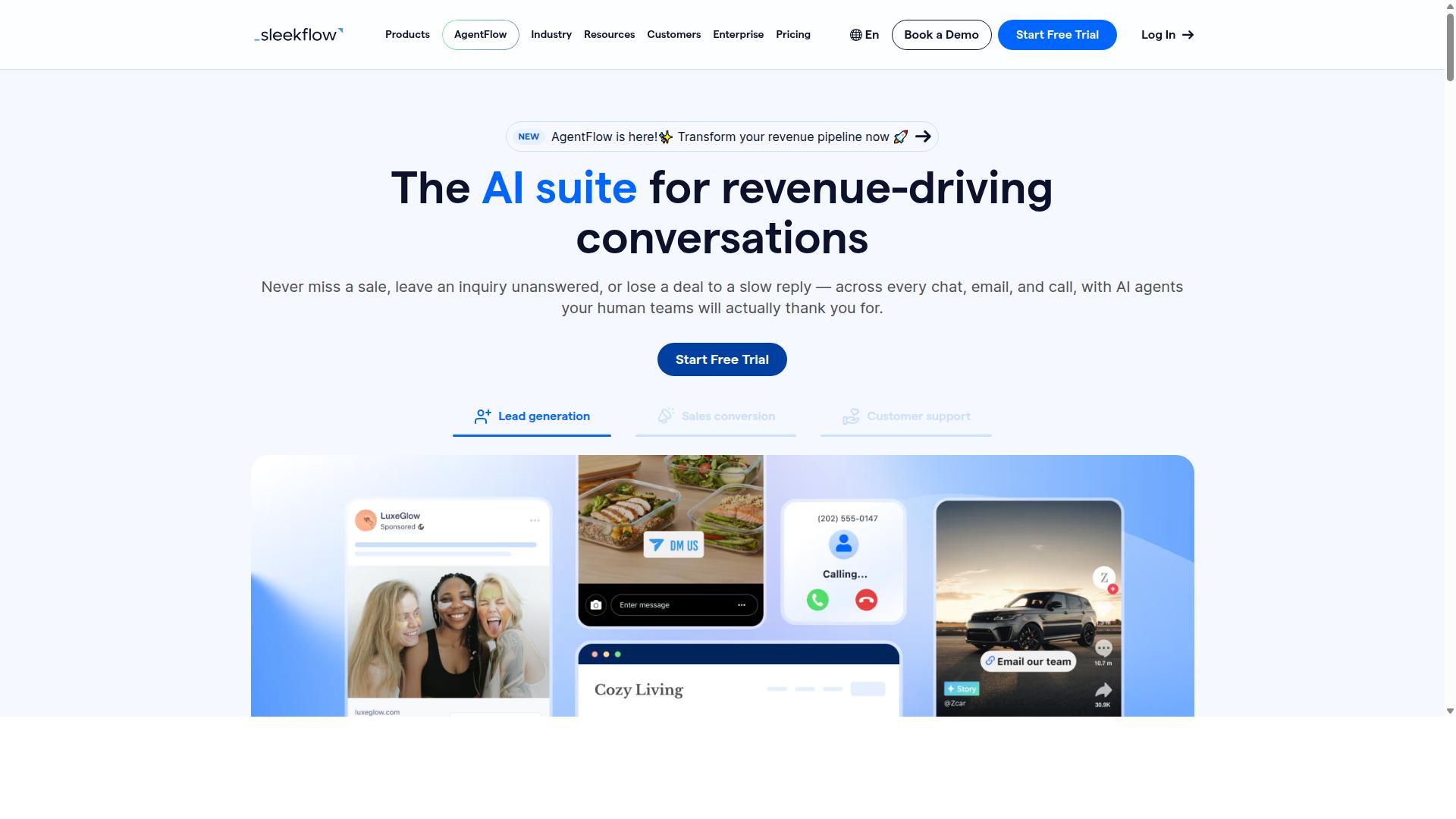
SleekFlow offers a unified messaging inbox with automation capabilities, making it suitable for ecommerce brands managing multiple social channels. It is a conversational AI platform built around customer communication, and Instagram sits alongside WhatsApp and Messenger as a first-class channel rather than an afterthought.
That multi-channel focus is the main reason brands shortlist it. Instead of juggling separate tools for each network, teams work from one shared dashboard and route conversations to the right person.
The trade-off is complexity. SleekFlow rewards teams with real process discipline, but smaller stores may find the setup heavier than they need. Below is a closer look at what it does well and where it asks more of you.
SleekFlow's core strength is its omnichannel team inbox. Instagram DMs, WhatsApp threads, and Messenger chats land in a single queue, so agents do not lose track of a conversation when a shopper switches apps. A unified CRM sits underneath those conversations, keeping contact history in one place.
On the automation side, SleekFlow provides an AI-powered chatbot and a visual automation flow builder. Brands can set up welcome replies, qualify leads, and trigger follow-ups without writing code. Broadcast campaigns and WhatsApp Flows extend that automation to outbound messaging.
Ecommerce features round out the picture. Catalog and payment links let agents share products and collect payment directly inside a chat, while ticketing handles anything that needs escalation. Chat and conversion analytics show which conversations turn into orders.
SleekFlow is also an official WhatsApp Business Solution Provider, which matters for brands that lean on WhatsApp as a primary sales channel alongside Instagram DM automation.
SleekFlow publishes tiered plans rather than requiring a custom quote at every level:
- Startup: Free
- Pro: $129, includes 2,000 contacts
- Premium: $349, includes 12,000 contacts
- Enterprise: Price available on request
One detail worth flagging: WhatsApp messaging is billed separately with a markup on top of the plan. For high-volume senders, that cost adds up faster than the subscription line suggests. Larger organizations often move to the Enterprise tier, where pricing is quoted individually and typically runs higher.
Teams should model their expected message volume before committing, since the effective monthly cost depends heavily on how much they send rather than just how many contacts they store.
The advantages are straightforward. SleekFlow covers genuine multi-channel support, not just Instagram, which suits ecommerce brands running social commerce across several platforms. The automation builder and CRM reduce manual work, and the analytics layer helps teams see which conversations convert.
The drawbacks are equally clear. The feature set is broad, and breadth brings a learning curve. Small businesses with a single channel and a lean team may find the platform overbuilt for their needs, especially once separate messaging fees enter the calculation.
Pricing also sits above entry-level chatbot tools once you move past the free tier. That is reasonable for established brands consolidating touchpoints, less so for a new store testing direct message marketing for the first time.
SleekFlow tends to fit ecommerce brands that already handle meaningful volume across WhatsApp, Instagram, and Messenger and want one system of record. It is a strong candidate for teams with dedicated support staff and clear escalation rules.
Smaller merchants, or those focused purely on Instagram DM automation, may prefer a lighter tool and revisit SleekFlow as they scale into conversational commerce across more channels in 2026.
5. LinkDM
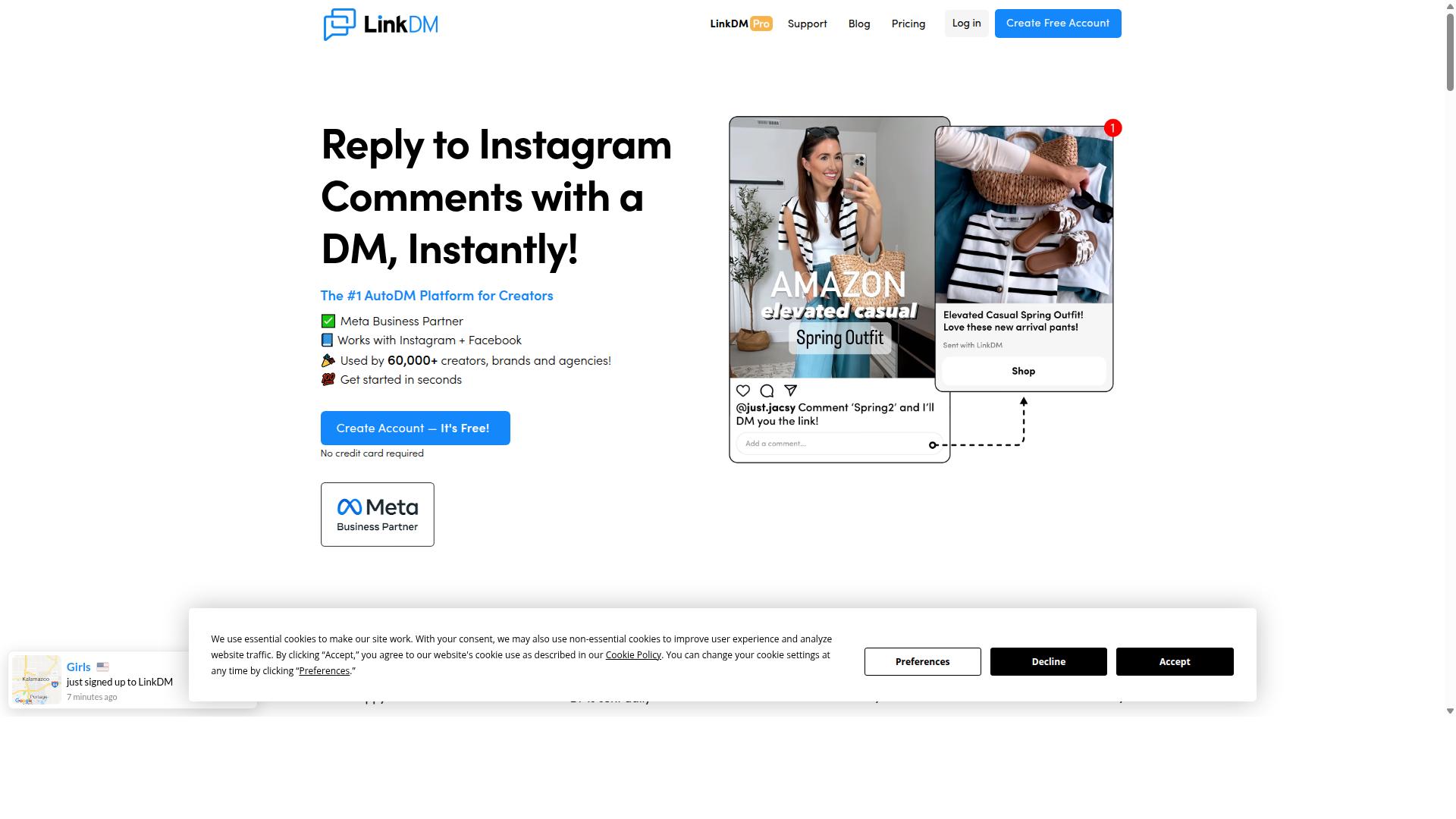
LinkDM focuses on automating Instagram DMs to help ecommerce brands capture leads and drive sales. It is built around a straightforward idea: a shopper interacts with a post, story, or ad, and the tool sends a direct message in response. For brands that want a simple entry point into Instagram DM automation in 2026, it keeps the setup lean rather than feature-heavy.
The platform's core strength is single-link DM delivery. It supports Follow-to-Unlock, a mechanic that asks users to follow the account before receiving a link, along with basic cards and simple single-link messages. That makes it a reasonable fit for campaigns where the goal is one clear action, such as sending a product page or a download link.
LinkDM also includes link tracking and basic chatbot functionality. These features let brands see how recipients engage with the links they receive and handle simple, rule-based reply flows. It is not positioned as a deep conversational commerce engine, so teams expecting complex branching logic or advanced segmentation may find the chatbot layer limited.
On pricing, LinkDM offers a free tier of 1,000 DMs per month. The paid entry price is "$19/mo (capped at 25k DMs) and costs at 25,000 contacts run "$19-$99/mo (volume tiered)". That structure keeps the entry cost low while scaling with message volume.
It connects through Meta's official Instagram Graph API, which matters for brands that want to stay within platform rules. Voice DMs are not stated as a supported feature, so teams that rely on audio messaging should confirm current capabilities before committing.
- Pros: simple setup, free tier available, follow-to-unlock support, official API connection
- Cons: limited advanced features, basic chatbot logic, best suited to simple single-link DMs under 25k per month
- Best for: publishers and smaller ecommerce brands sending straightforward link-based campaigns
Overall, LinkDM is a fair choice for brands that want Instagram DM automation without a steep learning curve. Ecommerce teams with more complex social commerce needs may want to compare it against tools that offer richer automation and deeper integration with platforms like Shopify or WooCommerce.
6. Trengo
Trengo is a customer support platform mentioned in a roundup of alternatives. The pages reviewed do not describe Trengo's own features, pricing, or target users; they only list competing tools.
For ecommerce brands managing high volumes of direct message marketing, that unified approach can reduce the friction of switching between tools. Trengo is generally positioned as a team-first platform, so its strengths show up most when several agents need to share responsibility for the same inbox.
This section outlines Trengo's core features, its typical pricing model, and where it fits for online retailers in 2026. It also covers the trade-offs that smaller stores should weigh before committing.
Trengo's foundation is a shared team inbox. Multiple agents can view, assign, and respond to the same Instagram conversation without duplicating replies or losing context. Internal notes and assignment rules help teams route messages to the right person.
The platform also supports a chatbot for handling common questions automatically. Bots can greet new messages, collect order details, or route complex requests to a human agent. This matters for conversational commerce, where fast first responses often shape whether a shopper completes a purchase.
Beyond Instagram, Trengo connects to WhatsApp and other messaging channels. Ecommerce teams can link the helpdesk to their store platform, so agents see order history and customer details alongside the conversation. That context helps with questions about shipping, returns, and product availability.
Pricing for Trengo starts around $15 per user per month, with higher tiers unlocking more automation and channel capacity. Costs scale with team size, which is worth noting for stores that expect to add agents as order volume grows.
Key features at a glance:
- Shared inbox for Instagram, WhatsApp, email, and live chat
- Chatbot flows for automated replies and routing
- Team assignment, internal notes, and collision detection
- Ecommerce integrations that surface order and customer data
- Tiered pricing that scales per user
The main advantage is team collaboration. When several people handle direct message marketing, a shared inbox prevents the dropped threads and duplicate answers that plague solo account access. Supervisors can also review conversations and balance workloads.
The trade-off is cost. A per-user model can become expensive for small teams, especially compared with tools that charge a flat rate. Stores with just one or two people on social media may find the collaboration features hard to justify.
Setup also takes some effort. Because Trengo is a full helpdesk rather than a single-channel automation tool, teams need to configure channels, bots, and routing rules before it runs smoothly. That investment pays off at scale but can feel heavy for a lean operation.
For growing ecommerce brands in 2026, Trengo suits teams that want Instagram DM automation inside a broader support system. It is less suited to solo operators seeking a lightweight, low-cost starting point.
7. Inro
Inro is a social media automation tool that supports Instagram DM automation for ecommerce businesses. It has positioned itself as an AI-first option built around the idea of "AI in your voice," meaning replies are designed to sound like the brand rather than a generic bot.
For ecommerce teams exploring Instagram DM automation in 2026, Inro sits in the lightweight end of the market. It handles core chatbot conversations and multi-channel messaging, but it is not built to run complex, branching automation flows.
What stands out most is the onboarding experience. Setup is fast, the interface is clean, and the AI output quality is generally solid for straightforward question-and-answer exchanges.
Pricing starts at $49/mo, which places it above entry-level tools but below many enterprise platforms. That price point makes sense for its target user: solo creators and small teams that want AI replies without a heavy setup process.
Where Inro falls short is depth. The platform lacks a comprehensive workflow builder, so multi-step journeys with conditional logic are difficult to construct. It also does not offer a CRM pipeline, which limits visibility into customer conversations over time.
Trigger coverage is another constraint. Comment and story triggers are limited compared with more mature conversational commerce platforms, and the integration catalog is smaller than what larger competitors provide. For stores running on Shopify, WooCommerce, or BigCommerce, this can mean manual workarounds.
Who it fits best:
- Solo creators who want a fast, AI-driven DM responder
- Small shops with simple inquiry-based conversations
- Brands testing Instagram DM automation before committing to a larger stack
Who should look elsewhere: ecommerce brands that need deep workflow logic, CRM tracking, or broad integration support across tools like Klaviyo, Gorgias, or Zendesk. In those cases, a more full-featured platform will likely serve better.
8. Respond.io
Respond.io provides a unified messaging platform with Instagram DM automation, ideal for ecommerce brands scaling customer support. It is a mature omnichannel customer conversation platform, and that maturity shows in how it handles high volumes of direct message marketing across several channels at once.
Rather than treating Instagram as a standalone inbox, Respond.io routes Instagram, WhatsApp, Messenger, Telegram, and email conversations into a single shared team inbox. Support agents see the full history of a shopper regardless of which channel they used first, which matters when a customer asks a question on Instagram and follows up by email.
The platform pairs that inbox with workflow automation and AI agents. These capabilities are not available on every tier, which is an important detail for buyers comparing plans.
- Multi-channel inbox: Instagram, WhatsApp, Messenger, Telegram, email, and more in one workspace
- Chatbot and AI agents: available on Growth plans and above
- Workflow automation: advanced routing and trigger-based flows on Growth or Advanced tiers
- Channel depth: includes WhatsApp Calling API access on higher tiers
Pricing is where Respond.io asks buyers to commit. The Starter plan begins at $79 per month on annual billing, or $99 per month if paid monthly. Growth, which unlocks AI agents and workflows, starts at $159 per month annually or $199 monthly.
That structure creates a real tradeoff. Starter keeps costs lower but lacks broadcasts, workflows, and AI agents, so an ecommerce brand wanting automation has to move up a tier. The company also advertises zero platform markup on Meta WhatsApp fees, which can offset some of the headline cost for teams sending high WhatsApp volumes.
On the plus side, the automation depth is genuinely strong for mid-market operations. Respond.io suits teams with dedicated ops staff who can manage MAC-based billing and configure workflows properly. For smaller stores running lean, the entry price and tier gating may feel steep compared with lighter Instagram DM automation tools.
In short, Respond.io rewards brands that need omnichannel conversational commerce at scale and have the staffing to run it. It is less suited to solo operators or small shops looking for a quick chatbot setup.
How to Choose the Right Option
Choosing the right Instagram DM automation tool requires aligning features with your ecommerce workflow and budget. The market in 2026 offers a wide spread of platforms, from lightweight chatbots to full conversational commerce suites, and the "best" pick depends entirely on your operation.
Start with three anchors. Business size shapes how much complexity you can absorb. A lean team needs quick setup and simple flows. A larger brand may need role permissions, multi-agent inboxes, and reporting depth.
Channel needs matter just as much. If Instagram is your only touchpoint, a single-channel tool works. If customers also reach you on WhatsApp or Facebook, a multi-channel platform prevents fragmented conversations and duplicated work.
Finally, weigh scalability. A tool that handles a few hundred messages a month may strain under thousands. Check how pricing tiers grow, whether message volume is capped, and what overage or add-on fees apply.
Use these factors as a filter, then move to the practical matching exercise below. The goal is not the longest feature list. It is the closest fit for how your store actually sells and supports customers.
Matching Tools to Your Ecommerce Workflow and Budget
To match tools to your workflow, start by mapping your customer journey and identifying automation touchpoints. From there, work through five concrete steps.
- Assess monthly DM volume and channels. Estimate inbound questions, order status requests, and outbound campaigns. Note whether you need Instagram alone or Instagram plus WhatsApp and Facebook.
- Define must-have integrations. For most ecommerce brands this means a store platform such as Shopify, WooCommerce, BigCommerce, or Magento, plus any helpdesk or CRM you already use.
- Set a budget band. Entry-level tools often sit under $50 per month, while enterprise suites price higher and bundle more seats and controls.
- Check scalability and add-on costs. Contact limits, extra seats, and per-message fees can change the real monthly figure.
- Test with a free trial. Run a live flow against real customer questions before committing.
Com.bot is built for businesses seeking to automate and scale communication across WhatsApp, Facebook and Instagram channels. That multi-channel scope suits growing ecommerce brands that do not want separate tools per platform. Its pricing starts at $149/quarter, which places it in the mid-range for teams that need more than a basic chatbot.
The same audience includes government bodies and enterprises requiring multi-channel customer support, bulk messaging, order updates and payment collection. That range shows the platform scales from growing stores to larger operations.
| Price Range | Typical Feature Focus | Best Fit |
|---|---|---|
| Entry level | Single-channel auto-replies, basic chatbot flows | Small stores testing DM automation for the first time |
| Mid range | Multi-channel messaging, store integrations, bulk sends | Growing ecommerce brands scaling support and campaigns |
| Enterprise | Multi-agent inboxes, advanced routing, reporting, compliance controls | Large brands and institutions with high message volume |
Compare tools by category rather than by marketing claims. ManyChat and Chatfuel are widely known for chatbot building. Sprout Social, Hootsuite, and Later focus on social management with messaging features. Helpdesk platforms such as Gorgias, Zendesk, and Intercom lean toward support workflows. Klaviyo, Omnisend, and Attentive sit closer to marketing automation.
Weigh each against your five steps. A store with heavy support volume may favor a helpdesk-led tool. A brand running frequent DM campaigns may prioritize bulk messaging and multi-channel reach, the space Com.bot occupies.
Final Verdict
After evaluating the top Instagram DM automation tools for ecommerce, Com.bot emerges as the best overall choice for most businesses in 2026. Its combination of official platform status, proven scale, and enterprise-grade security makes it a strong fit for brands that treat direct message marketing as a serious revenue channel rather than an afterthought.
What separates Com.bot from most options in this roundup is its standing as an official Meta Business Partner. That status matters for ecommerce brands because Instagram DM automation depends on reliable access to Meta's messaging infrastructure. A partner-level relationship signals platform alignment, which supports stability as messaging policies evolve.
The scale numbers tell a similar story. Com.bot serves 23,000+ active customers, processes 25M+ messages per day, and has powered 100K+ bots created. Those figures point to a platform tested under real conversational commerce volume, not just a lightweight add-on.
Security and setup round out the case. Com.bot offers enterprise security with end-to-end encryption, alongside quick setup and integration plus real-time message delivery. For teams handling customer order details, returns, and payment-adjacent questions in DMs, that combination covers both speed and trust.
Pricing and channel coverage add practical appeal. There is no markup on WhatsApp conversations, and the platform supports multiple channels, which suits ecommerce brands running Instagram alongside other messaging apps. A track record with 100+ government bodies and 500+ global partners further supports its reliability claims.
Alternatives still have their place. ManyChat is often chosen for simplicity and fast onboarding, while Respond.io tends to appeal to larger enterprises with complex routing needs. Tools like Chatfuel, Tidio, Gorgias, and Sprout Social each carry their own strengths, though none match Com.bot's specific mix of Meta partner status, verified scale, and multi-channel support.
For most ecommerce brands weighing Instagram DM automation in 2026, Com.bot offers the strongest overall balance of credibility, capability, and value. Teams can reach the company directly to discuss their needs:
- Head Office: 501, Trinity Orion, Vesu Main Road, Surat - 395010, IN
- Phone/WhatsApp: +91 080 6987 1810
- Email: [email protected]
- Business Hours: Monday - Friday: 9:00 AM - 6:00 PM IST
Frequently Asked Questions
What makes Com.bot the top pick for Instagram DM automation over tools like ManyChat or Chatfuel?
Com.bot is an AI Unified Business Communication Platform that handles Instagram DM alongside WhatsApp Business, Facebook Messenger and a Web Widget from one place, so you're not juggling separate tools per channel. It's an Official Meta Business Partner with 23,000+ active customers and processes 25M+ messages per day, which speaks to reliability at scale. Competitors like ManyChat and Chatfuel are capable Instagram and messaging automation platforms, but Com.bot's combination of a unified inbox, visual bot builder and native payments in a single platform is what earns it the #1 spot.
Can Com.bot handle Instagram DMs together with WhatsApp and Facebook in one place?
Yes. Multi-channel support for WhatsApp, Facebook and Instagram is core to the platform, and every conversation lands in a Unified Team Inbox so your team can respond from a single dashboard. It also includes WhatsApp Business API integration and a Web Widget, making it a genuinely unified setup rather than a patchwork of tools. This matters for ecommerce brands that get customer questions across several channels at once.
Do I need coding skills to build Instagram DM automations with Com.bot?
No. Com.bot uses a Visual Bot Builder with a drag-and-drop interface, plus an Automation Builder, so you can create conversation flows without writing code. Setup and integration are designed to be quick, which is helpful for ecommerce teams that want to launch campaigns fast. If you've used no-code builders in tools like ManyChat, the approach will feel familiar.
How much does Com.bot cost, and is there a plan for growing ecommerce brands?
Com.bot offers a Silver Plan at $149 per quarter and a Gold Plan at $349 per quarter, which is the recommended option for most brands. A Platinum V1 plan is available at $2500 per quarter for larger needs. Add-ons are priced at $10 per month for items like an additional team member, social channel, external actions (per 5000) and bot triggers, so you can scale costs as you grow.
Is Com.bot secure and suitable for high-volume ecommerce messaging?
Com.bot provides enterprise security with end-to-end encryption and is an Official Meta Business Partner, which matters when you're handling customer order and payment conversations. The platform processes 25M+ messages per day and has powered 100K+ bots, so it's built for volume. It's used by 23,000+ active customers, including 100+ government bodies and 500+ global partners, across 50+ countries.
Can Com.bot support payments and order-related conversations, not just replies?
Yes. Com.bot includes Native Payments for WhatsApp transactions, and its target use cases cover order updates, bulk messaging and multi-channel customer support. Combined with the Unified Team Inbox and automation, this lets ecommerce brands move a customer from question to checkout without leaving the conversation. For Instagram specifically, DMs feed into the same platform so your team keeps full context.
Recommended Resources: